April 9, 2026
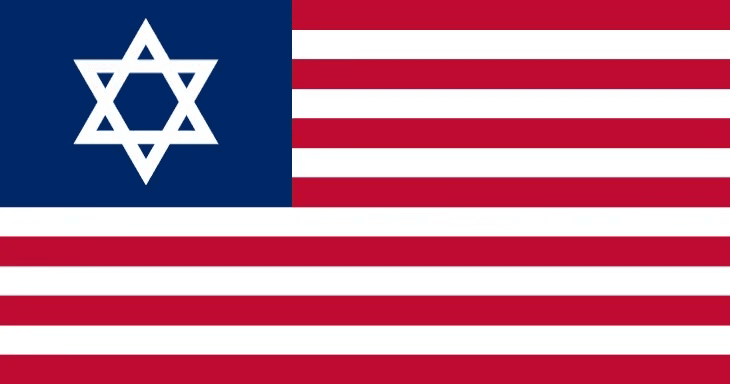
Israel First, America Last
Without sufficient pretense, no clear objectives, nor any viable off-ramp, President Trump has dragged the nation into another unwinnable intervention in the Middle East, in partnership with and at the behest of the genocidal state of Israel. In their opening gambit on February 28th, the U.S. and Israeli joint forces made two fateful moves: assassinating Iranian Supreme Leader Ayatollah Khamenei along with members of his family in their home, and killing one hundred seventy children in a double tap strike on a school in the city of Menab. High off the success of the operation in Venezuela that deposed Nicolas Maduro just weeks prior, President Trump likely wagered that his touch-and-go “decapitation” method would be met with similar acquiescence, if not by the Iranian regime, at least by his MAGA base of supporters. This was a very grave misjudgment. As a war of attrition is underway, the extent to which the United States and its proxies will weather financial loss, military degradation, and political blowback in exchange for Iran’s sovereignty will soon be revealed, exposing just how far Israel comes first before America.
When Donald Trump first emerged on the political stage a decade ago, his renegade outsider attitude and punchy rhetoric shook up the old guard of the GOP institution. Marred by two “forever wars” and the economic hardships of the 2008 recession, the MAGA movement advanced as a foil to the stiff, antiquated conservative variety now pejoratively referred to as the “neocons”. Many were compelled by his simple promise to put American First.
Ten years on, the betrayal of this fundamental promise has once again ruptured the Conservative movement into two mutually exclusive factions: Israel First vs. America First.
What began with criticism of America’s proxy war on Russia from major right-wing media voices like Tucker Carlson and Candace Owens soon devolved into fierce awareness and opposition to the country’s uniquely servile relationship toward Israel. And as the world watched a genocide unfold across their phone screens with full diplomatic impunity and foreign support, the already fractured narrative of allyship and mutual interest totally shattered. It soon became abundantly clear that the American First agenda diverged from the “Greater Israel” objectives, and no instance is this more obvious than in the decision to wage war on Iran. Through forces of kompromat, bribery, or fanatical devotion, Trump has undermined the very essence of his own political commitment toward no new wars by prioritizing Israel’s expansionist interests over American lives, freedoms, and prosperity.
After thirty unsuccessful years of lobbying American administrations and lawmakers in America for war on Iran, Israeli Prime Minister Benjamin Netanyahu finally struck gold. Seeing Trump’s second and final administration as a narrow window of opportunity, a record number of six visits were made to the White House in 2026 alone ahead of Operation Epic Fury, during which the final details were likely hammered out. All the while, U.S. forces were gradually building up military capacity across regional bases and waterways at a scale not seen since the start of the Iraq War, a foreboding indication of what was to come. But unlike previous interventions in the past like in Iraq and Syria, it seems little effort was made to concoct a solid pretense for the strikes on Iran. It couldn’t be said that Iran had developed a nuclear weapon since its facilities were bombed the year prior. After all, the war began in the midst of Omani-administered nuclear talks in Geneva where U.S. envoys Steve Witkoff and Jared Kushner met with Iranian officials to negotiate on the key issue of nuclear enrichment and were reported to have made meaningful progress. Pressed for answers by journalists in the outset of the war, Marco Rubio gave the closest thing to a justification: Iran was going to attack the United States if it was attacked first, which Israel planned to do with or without U.S. backing. In effect, Rubio admitted that Israel had goaded America into a battle it knew it couldn’t fight alone, effectively leaving the U.S. no choice but to wage war on Iran on its behalf.
As Operation True Promise 4 began, the IRGC abandoned its policy of “strategic patience” and commenced a targeted campaign of pressure. First, heavy retaliatory missiles began striking targets with precision, unprecedented in both force and volume, leaving U.S. and Israeli forces scrambling to intercept the intense barrages that overwhelmed detection capabilities. Relatively cheap weaponry domestically produced in Iran like the $20,000 Shahed drones were able to penetrate deep into enemy territory, destroying billions of dollars in advanced military infrastructure and the illusion of U.S. military superiority along with it. It’s easy to imagine that with trillions of dollars of investment at stake, Gulf monarchs are beginning to rethink their congenial relationship with the Trump administration that has now embroiled their region in conflict. In cities like Dubai, Iranian drone attacks on U.S. and Israeli military outposts have unraveled years of marketing as thousands of foreign expats who once flocked to live, work, and vacation in the luxury tax-free destination were seen flooding local airports en masse in a desperate bid to escape. While weapons can be replaced and buildings rebuilt, damage to public image is not so easily fixed. Just weeks into the conflict, the very basis of U.S. power projection through foreign bases and confidence in its air superiority has only begun to erode.
But perhaps the greatest source of pressure Iran has exerted has thus far been the closure of the Strait of Hormuz, a vital naval channel in the Persian gulf through which a quarter of the world’s oil, liquified natural gas, and fertilizer passes through. If any lesson was learned with the Russia-Ukraine War, it’s that energy dependence can totally alter geopolitical dynamics, and that already heavily sanctioned countries are far less vulnerable in the outbreak of war. After the IRGC announced a total blockage of shipping in the first few days of conflict, the global financial system was sent into a freefall. Major global oil producers like Qatar and Kuwait announced they would be ceasing production in declaration of Force Majeure, resulting in $15 billion is financial loss and an estimated $2 trillion wiped from the market cap. In a panicked attempt to rally the markets and ease fear of global shortages, the Trump administration has issued multiple stop gap measures, like unsanctioning Russian gas and issuing calls for a global coalition of naval forces which has so far gone unanswered. This has only revealed how isolated and under pressure the U.S. has become. Adding insult to injury, Iran’s decision to eventually reopen access to the Strait to non-enemy countries was announced on the stipulation that trade is done in the Yuan, a direct slap in the face to the U.S. Petrodollar that has long reigned supreme. If Iran continues in this path, the small maritime corridor in its control could threaten to destroy the entire U.S. dominated global financial system.
Domestically, the situation is no less concerning. As the midterm elections approach, it will come to no surprise if the Democrats sweep up Congressional seats across the nation, in which case the Republican party will cede its majority and the mandate it had to pursue its partisan interests. In some states, gas prices have reached $5 per gallon, further fueling the financial anxieties of struggling Americans and their political discontent as they feel the squeeze of their government’s military adventurism abroad. Already mired in the Epstein Files scandal and the anti-ICE protests, the blunder of the Iran War has only further almost cemented Trump’s unpopularity, becoming toxic to the political future of those in his orbit as well. As Vice President J.D. Vance and Marco Rubio eye the Presidential nomination come 2028, their proximity to Trump and loyalist deference to him in the Iran War may be too much to swallow for young Conservatives of the America First persuasion.
Iran may not be the only nation whose sovereignty is on the line in this conflict. While the fog of war remains thick, President Trump’s decision to wage war on Iran has perhaps irreversibly put into motion a geopolitical death-spiral that may overhaul U.S. hegemony as we know it. Without the petrodollar, its sprawling global military bases, and military superiority, what weight will America’s “Big Stick” carry in the years to come? Can it even hope to counterbalance China in the years to come? The very possibility of this suggests that the Trump administration would willingly lead the America in all her “Greatness” headfirst into demise as a sacrifice for Israel’s expansionist objectives. For a nation ostensibly founded on its struggle for independence from foreign rule, the current state of affairs is ironic to say the least.
June 25, 2026
The Pakistan Paradox
From autocracy to geopolitical stardom
May 17, 2025
Technocracy Simplifies the Business of Genocide
On the fateful union of Big Tech and the Military Industrial Complex
April 8, 2025
Palestine Action in the Crosshairs
England's descent into tyranny
April 2, 2023
Sanctions, Suffering and Syria
How U.S. policy kills in the name of freedom
November 18, 2022
The Neocolonial Energy Crisis
When Europe is in need where does it turn?