April 2, 2023
Sanctions, Suffering and Syria
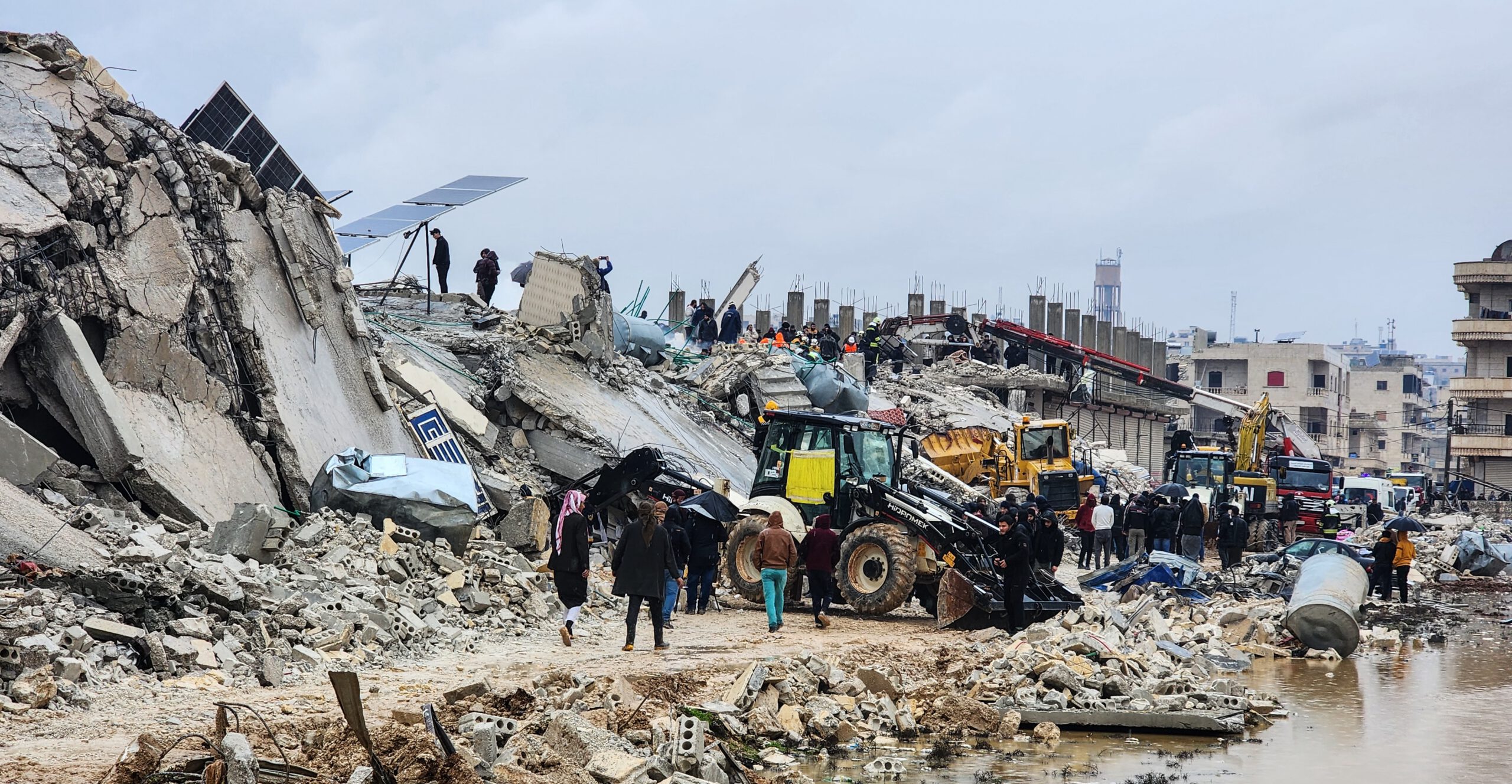
Following the devastating earthquakes that hit parts of Türkiye and Syria on Feb. 6, the debate surrounding U.S. sanctions has reignited. More than 54,000 deaths have been reported in the two nations, and millions more remain displaced. The impact on Syria has been even more devastating in light of the country’s decade of civil war, accompanied by Western sanctions.
As the global community coordinated direct humanitarian assistance toward those in need following the initial tremor, essential help failed to reach northern Syria in time. Assistance from the United Nations Disaster Assessment and Coordination team was delayed because of bureaucratic roadblocks and cautious interpretations of international law, resulting in too little, too late. Many Syrians, already displaced and dejected by years of conflict, felt abandoned once again by the global community. While many have pointed the finger at the government of Bashar al-Assad for the lackluster response, others, including Assad’s government, point to sanctions as the main roadblock to helping those in need and have renewed calls to have them lifted.
Caesar Act
In June 2020, Congress passed the Caesar Syria Civilian Protection Act in response to wartime human rights violations committed by the Assad regime. Considered to be a very broad piece of legislation, the bill was designed to hinder Syrian government efforts to rebuild war-torn areas of the country. While certain exemptions exist to allow for humanitarian efforts, the Caesar Act created a climate of hesitancy and overcompliance from international banks, governments and financial institutions, which blocked the flow of critical money into aid channels. The sanctions have caused major disruptions in the Syrian economy, leading to a devalued currency, limited investment and isolation from the global economy. Today, 90 percent of the Syrian population lives below the poverty line with limited access to food, housing, electricity, clean water, transportation and healthcare.
While the Caesar Act has been lauded as a major blow against Assad, the question of its efficacy and ethics has re-entered the geopolitical zeitgeist due to the earthquake. In an op-ed published by the Washington Post on Feb. 9, former State Department employee Wa’el Alzayat argued against lifting sanctions on humanitarian grounds: “The motivation behind these sanctions, especially those post–2011, is straightforward: to limit Assad’s ability to finance his military and militias who have been implicated in some of the worst atrocities of this century...While sanctions have certainly contributed to stunting government expenditures and the Syrian lira’s depreciation, they have had no significant bearing on the delivery of humanitarian assistance.” Many similar Instagram infographics have circulated recently echoing this narrative, paradoxically attempting to use human rights concerns to dissuade individuals from advocating for a more open flow of resources to war-stricken and devastated Syrians.
Sanctions as a crutch
Sanctions have assumed a vital position in the arsenal of U.S. foreign policy in recent decades. Tactically enlisted against nations and individuals the United States has deemed adversarial, sanctions are used as a tool to coerce their target into compliance by way of economic and political isolation. Otherwise referred to as unilateral coercive measures, sanctions create a punitive climate of overcompliance by organizations or nontargeted states, wherein any assistance or collaboration extended to a nation designated enemy status is assumed to draw the ire of Washington.
Sanctions stunt a nation or organization’s ability to import goods such as pharmaceuticals and industrial parts vital to the function of key infrastructure, from water sanitation to healthcare. Shrouded in dense legal jargon, sanctions rarely make news headlines, and their impact remains unknown to most Americans. Despite this, they are a crucial bipartisan tool, often referred to as a “peaceful alternative to war.” The question is, how peaceful can sanctions really be?
During the Gulf War in the 1990s, the United States applied a comprehensive and crippling round of sanctions on Iraq. The intent at the time was to decisively stunt Saddam Hussain’s regime through a comprehensive financial and trade embargo. The results were utterly catastrophic for the population. An estimated 500,000 Iraqi children died due to malnutrition. When questioned if the human cost was justified in a 1996 “60 Minutes” interview, Secretary of State Madeleine Albright famously responded, “I think this is a very hard choice, but the price, we think is worth it.” From Iraq, to Afghanistan, to Cuba, to Venezuela and to Iran, sanctions have immiserated millions of civilians, the collateral damage of U.S. foreign policy.
Indeed, when sanctions are imposed, it is the civilian population which typically suffers the most. Data shows that in sanctioned nations, civilian caloric intake decreases, infant mortality increases and preventable diseases lead to preventable deaths. A 2019 study published by the Center for Economic and Policy Research reported that more than 40,000 Venezuelans have died as a consequence of U.S. sanctions since 2017.
In fact, sanctions are a form of collective punishment against civilians, who suffocate under their grip. Many human rights experts have argued that unilateral coercive measures constitute an unequivocal violation of international law and human rights. If regime change is intended through the enforcement of sanctions, they have been unsuccessful in achieving this goal. Sanctions are neither effective nor ethical, yet they continue to be used as a vital tactic of U.S. foreign policy.
In an official statement following a 12-day trip to Syria in November 2022, U.N. Special Rapporteur Alena Douhan stated: “No reference to good objectives of unilateral sanctions justifies the violation of fundamental human rights. The international community has an obligation of solidarity and assistance to the Syrian people.” If human rights and international law are values the global community cares to uphold, the onus exists to call for an immediate end to unilateral sanctions as a matter of urgency.
Yet as recently as March 6, Congress overwhelmingly voted in support of maintaining sanctions on Syria, a shamefully resounding commitment to upholding this punitive assault on a downtrodden civilian population. As international efforts try to help Syrians rebuild and rebound from yet another traumatic event, an end to the use of human lives as geopolitical pawns is necessary.
June 25, 2026
The Pakistan Paradox
From autocracy to geopolitical stardom
April 9, 2026
Israel First, America Last
Trump's war on Iran and the accelerated decline of American Empire
May 17, 2025
Technocracy Simplifies the Business of Genocide
On the fateful union of Big Tech and the Military Industrial Complex
April 8, 2025
Palestine Action in the Crosshairs
England's descent into tyranny
November 18, 2022
The Neocolonial Energy Crisis
When Europe is in need where does it turn?