June 25, 2026
The Pakistan Paradox
When Islamabad became the staging ground for ceasefire talks between U.S. and Iranian envoys in April, it seemed that Pakistan was all that stood between world peace and world war. With each passing week the Hormuz Strait remained closed, global energy prices rose, all while U.S. forces expended their finite arsenal of advanced weaponry to no avail. With so much at stake, pressure mounted for a cessation of hostilities and a return to shipping as usual. As Iran and U.S. officials signaled tepid gestures toward diplomacy, Pakistan’s strategic placement both politically and geographically made it the ideal channel through which talks could advance. Quoted in The Sunday Times, Pakistani Prime Minister Shehbaz Sharif declared Pakistan’s role in mediation as “one of the shining moments in our history.” To their credit, Pakistani officials were tasked with the herculean effort of tempering an erratic U.S. position while maintaining Iran’s patience and trust which had twice been broken under previous negotiations. And for its efforts, the populous and well armed yet barely stable nation has been catapulted into diplomatic stardom.
On June 15, it seemed, if only for a moment, that the "Islamabad Talks" between U.S. and Iranian forces had yielded success with the digital signage of a Memorandum of Understanding (MOU), stipulating mutual compliance to a 12-point plan to end hostilities. But as belligerent Israeli aggression against Lebanon continued in violation of the first point in the MOU, the fleeting glimmer of peace was swiftly stamped out as missile exchanges recommenced the Hormuz Strait remained closed.
With diplomatic efforts on life support, Pakistani officials continue to wager on a peaceful settlement between both parties. Should they fail, however, they risk existential political collapse, economic isolation and regional war.
With near total dependence on Gulf oil for its energy needs, the outbreak of conflict set Pakistan directly in the path toward a calamitous energy crisis, one that would easily eclipse the harrowing 2022 episode of energy shortage spurred from the Russia-Ukraine war. Just four years ago, inflation spurred from high energy costs led to widespread anti-government protests across the globe, resulting in the overhaul of incumbent governments like in Sri Lanka where its knock-on effects led to the storming of the presidential palace and an end to the ten-year long Rajapaksa regime. Similar fuel and cost of living crises would almost certainly lead to upheaval in Pakistan, potentially threatening the the fate of its controversial military hybrid regime, which itself assumed power following a coup in 2021.
Elected into office in 2018, cricketer turned-populist Imran Khan entered into power with lofty goals to shake up the nation’s dynastic military stronghold on politics and uplift the working-poor through social welfare. Under his leadership, Pakistan seemed poised to enter a new era of development and growth it so desperately needed. But upon assuming office in 2018, the Pakistan Tehreek-e-Insaf (PTI) government inherited a balance-of-payments crisis, a dire financial situation brought on by Pakistan’s combination of excessive foreign debt, dependence on costly imports, and inability to promote and sustain domestic investment. Despite his stated distaste toward the IMF, Imran Khan was forced to seek an $6 billion dollar bailout package to avert economic collapse, the 13th in Pakistan’s short history.
Still intent on changing the nation’s historically dependent and servile relationship toward foreign benefactors, Imran Khan engaged in a series of bilateral courtships to diversify its economic relationships outside the scope of U.S. financial institutions. Within his first year in power, Khan secured a further $9 billion dollars in loans through its budding relationships with Saudi Arabia, Qatar, U.A.E, and most notably, China. Slowly but surely, Khan’s open-armed approach to regional powers temporarily buoyed the fragile Pakistani economy, and distanced itself from the U.S. in the process.
All the while, mutiny stirred within Pakistan’s elite military circle who opportunistically saw the emerging rift between the U.S. and Pakistan as a free ride to power. Newly leaked cables published by Drop Site News between Biden-era U.S. intelligence and Pakistani opposition reveal tacit support for a vote of no confidence in Khan’s government in retaliation for its perceived support of Russia in the outbreak of its invasion of Ukraine, a plot which successfully ushered him out of office and into solitary confinement where he remains to this day.
Now replaced with the current cast of characters at the center of Pakistan’s diplomacy, Field Marshal Asim Munir and Prime Minister Shehbaz Sharif have consolidated their power through a series of anti-democratic measures. In addition to its crackdown on PTI activities and the indefinite jailing of Imran Khan, the current government has enlisted a slew of repressive tactics against political opposition ranging from law-fare to state violence and assassination.
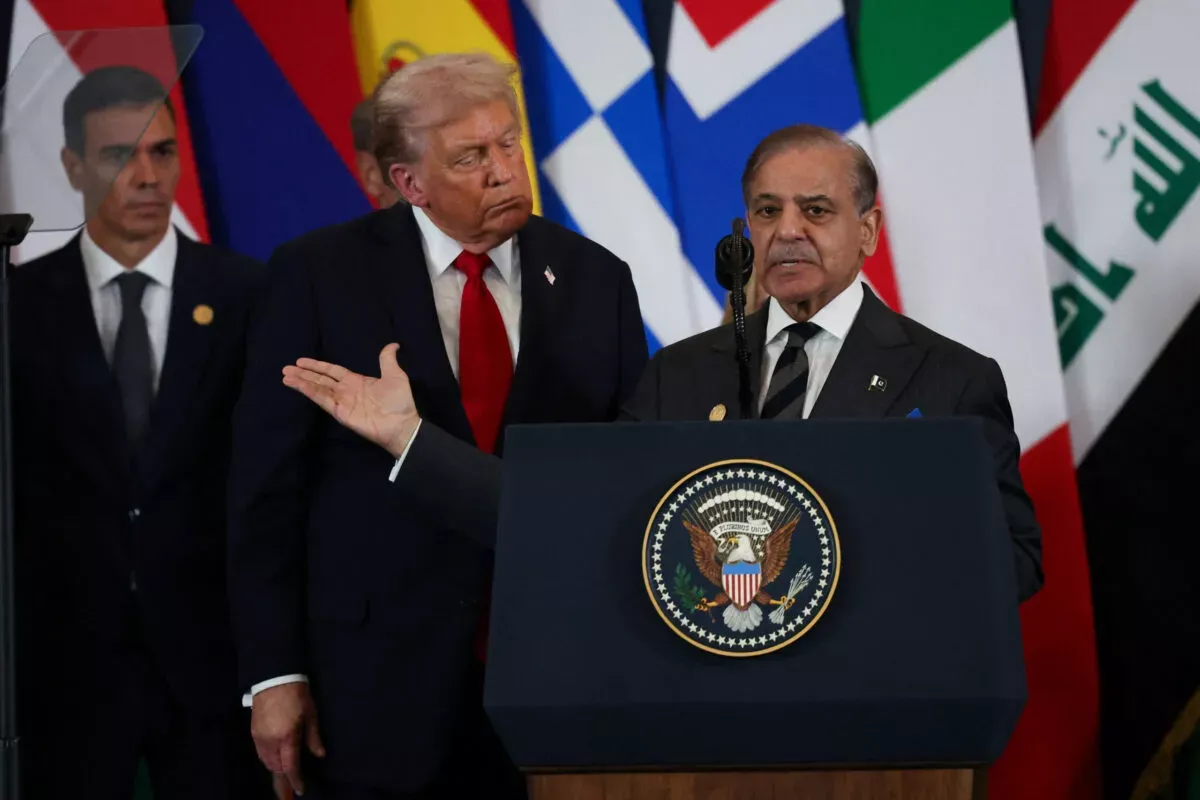
But perhaps most useful of all in the current government's consolidation of power has been its ingratiation with U.S. President Donald Trump, having succeeded in doing so through flattery. Sharif and Munir have instrumentalized Pakistan's diplomatic standing by nominating President Trump for the Nobel Peace Prize, offering to send Pakistani troops to Gaza under a now abandoned peacekeeping plan, and (most recently) establishing a national cryptocurrency council to adopt the Trump family’s stablecoin for cross-border transactions. Trump has returned this flattery with his own flowery approval, referring to Asim Munir as his "favorite field marshal" in October of last year. By transacting servitude for support, the current regime has won the approval of the current U.S. administration, and for their efforts, have temporarily assuaged internal concerns of instability through external support.
But despite its momentary political stasis, the economic dysfunction endemic to Pakistan still persists, now passed on to the current regime under much dire circumstances. While Pakistan was narrowly able to survive the Covid-19 pandemic and the subsequent 2022 energy crisis, the Iran War has left the aid-dependent nation treading rough waters, only narrowly staying afloat. Not only has the outbreak of conflict in the Gulf threatened the source of 85% of Pakistan’s energy needs, the further weakening of GCC states like U.A.E and Qatar could easily threaten the flow of funds into the country, be they loans or remittances from exported Pakistani labor. This could easily hasten the return of another financial crisis, the likes of which the current government may not survive.
To make matters more complicated, Pakistan’s security concerns are no less dire. In the last year alone, Pakistani forces have waged conflict with Afghanistan to its west and India on its east, while battling separatist violence internally. Budding threats of escalated regional war could possibly add yet another battle front to Pakistan’s already loaded plate. In 2025, Saudi Arabia and Pakistan signed a Strategic Mutual Defense Agreement, pledging to support one another militarily against aggression toward either country. While the two nations have long shared defensive partnership, never before has Pakistan’s nuclear umbrella extended so far. Waning faith in the U.S. as a defensive partner could potentially lead Pakistan into direct engagement, setting it directly against its Iranian neighbor and in effect, into the U.S.-Israeli bloc. For Pakistan, this possibility only adds to the mounting pressure for a lasting peace deal.
Many geopolitical commentators have remarked on shifting the global order ad nauseam, but the bitter truth is that an ostensibly isolated and inferior Iran has been able to upend the current global order in response to U.S.-Israeli aggression. Countries weak and strong, north and south alike have felt the tremors of crisis, and those with the agency to do so have made moves to stifle the shock that may be coming. For Pakistan, this means doubling down on peace talks as the only viable path for political and economic survival. Servile dynamics toward greater powers that once sustained it, now plunges the nation into precocity. No greater example of this is the nation's reliance on IMF loans. Now a double edged sword, Pakistan's good standing with President Trump has limited its lateral movement toward neighboring partnership with Iran and China as sources for energy needs and development respectively. Only as a U.S.-sanctioned form of good will were Pakistan and Iran permitted to open six new land routes to alleviate the supply chain challenges brought on by the Trump-imposed naval blockade. While a positive development, this implies that all Pakistani actions toward Iran are limited by and carry traces of its deference toward its American patron, blurring the lines between its function as conduit and official role as broker.
What Pakistan has in strategic placement and good will, it lacks in solid standing to push through potentially trickier and harder won concessions effectively, particularly on the red-line of Lebanon which has become a sticking point in negotiations. This contrasts with China’s role in successfully brokering an Iran-Saudi detente in 2023, which despite its lesser scale, has made measurable progress toward regional stability in the face of many challenges.
In a quote to the Financial Times, policy adviser and specialist on U.S.-Pakistani relations Hussain Nadim aptly described the current Pakistani position as “a military dictator and a ruling elite, trying to punch above their weight in geopolitics, as an escape from the reality of failing governance, security and economic conditions in Pakistan”.
Beneath the thin veil of diplomatic veneer of Pakistan's global posture lurks a deeply precarious reality, one that arguably lends itself to the overall limitations of its ability to push the needle on the peace talks altogether.
Just the same, this volatility and dysfunction act as formaldehyde, preserving its archaic and clearly unsustainable position in an anti-fragile cycle of reliance, corruption, and repression. By hedging on the strength of the United States and the prosperity of its Gulf allies, it has outsourced legitimacy and security for a decaying political-economic order, one that Iran has now undeniably disturbed.
Perhaps temporarily functional, this dynamic fundamentally obstructs the nation’s ability to become a truly influential regional actor with the democratic support of its people. The current hybrid-regime may soon be forced to confront the fact that Pakistan’s utility in the chess game of greater powers can only carry its internal dysfunction for so long. While it survives for now, its unique blend of toxic stability may not outlive the next paradigm shift in global politics.
April 9, 2026
Israel First, America Last
Trump's war on Iran and the accelerated decline of American Empire
May 17, 2025
Technocracy Simplifies the Business of Genocide
On the fateful union of Big Tech and the Military Industrial Complex
April 8, 2025
Palestine Action in the Crosshairs
England's descent into tyranny
April 2, 2023
Sanctions, Suffering and Syria
How U.S. policy kills in the name of freedom
November 18, 2022
The Neocolonial Energy Crisis
When Europe is in need where does it turn?